
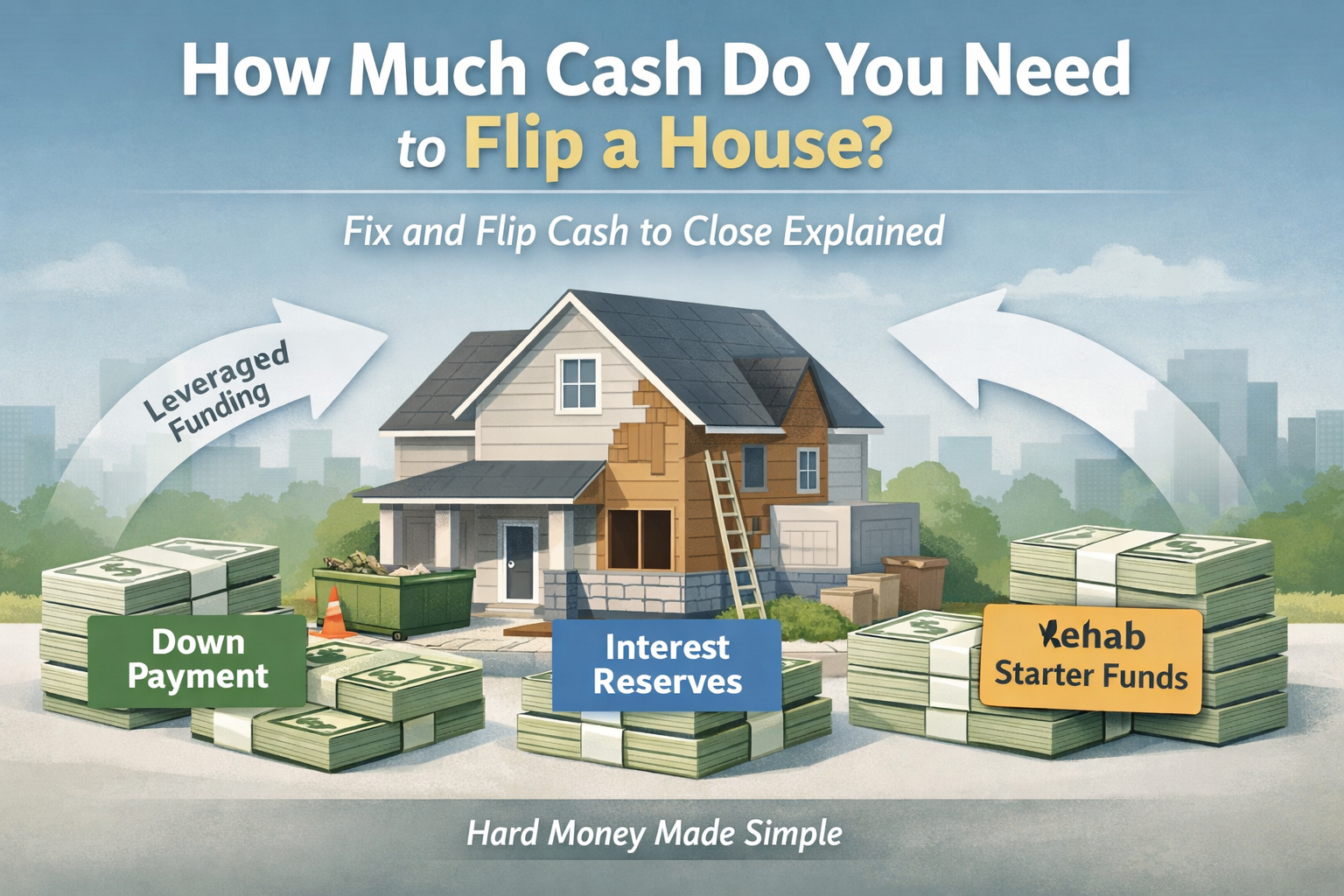
One of the biggest myths I hear from new investors is this:
“I need a ton of cash to flip houses.”
You don’t.
What you actually need is enough cash to get approved, keep the lender comfortable, and protect your liquidity.
That’s where hard money shines.
Hard money is one of the best ways to leverage your cash so you can control larger deals without draining your bank account.
Let’s break this down with real numbers.
Why Hard Money Helps You Scale Faster
Most hard money lenders will fund:
80% to 90% of the purchase price
100% of the rehab with a detailed scope of work
That means you are not paying for the entire deal out of pocket. You are using leverage.
The goal is not to spend all your money.
The goal is to stay liquid, look low risk to the lender, and earn better terms.
The more cash reserves you have, the safer the deal looks.
Safer deal equals better terms for you.
Fun fact: Hard money is called hard money because the loan is secured by a hard asset, usually real estate, not by your personal income.
How Much House Can You Buy With the Cash You Have?
Here’s what this looks like in real life.
| Cash Available | Max Purchase Price | Comfortable Target Range |
| $30,000 | $129,000 | $110k to $120k |
| $50,000 | $230,000 | $200k to $215k |
| $70,000 | $332,000 | $290k to $315k |
| $90,000 | $434,000 | $380k to $410k |
| $110,000 | $535,000 | $470k to $510k |
Assumptions for This Example
To keep things simple, here’s what we’re assuming across the board.
- Interest rate: 11 percent
- Rehab budget: $30,000
- Loan term: 6 months
Cash needed for hard money approval includes:
- 15% of purchase price (I used 15% to be conservative. Most lenders fund up to 90% of purchase price.)
- 10% of rehab cost
- 6 months of interest payments
Interest is calculated on a total loan amount:
85% of purchase price + $30,000 rehab
That gives us a simple approval formula:
Cash needed ≈ 15% of purchase price + 10% of rehab + 6 months of interest(your loan term)
This is not your total project cost.
This is the cash most lenders want to see for approval and closing comfort.
I’ll break this down even further.
The Three Buckets of Cash You Need for a Fix and Flip
When a hard money lender looks at your deal, they are not asking
“Do you have all the money for this flip?”
They are asking
“Do you have enough cash to close, start the rehab, and comfortably make payments?”
That breaks into three parts.
1) 10 to 15 Percent of the Purchase Price
Most hard money lenders fund 80 to 90 percent of the purchase price.
That means you bring:
10 to 20 percent of the purchase price as your down payment
This is your skin in the game.
Example
$200,000 purchase price
15 percent down = $30,000
This money is paid at closing.
The more you put down, the lower the lender’s risk.
Lower risk often means better terms, faster approval, and smoother underwriting.
2) 6 Months of Interest Payments (Your Loan Term)
Even though many fix and flip loans are interest only, lenders want to see that you can carry the loan.
Most fix and flip terms are 6 to 9 months.
For approval, lenders usually want to see at least 6 months of interest reserves(per your loan term).
Interest is calculated on:
85 percent of purchase price
plus
100 percent of rehab budget
Example
$200,000 purchase price
85 percent loan = $170,000
Rehab budget = $30,000
Total loan amount = $200,000
At 11 percent interest:
Annual interest = $22,000
Six months of interest ≈ $11,000
You don’t always prepay this, but the lender wants to see you can cover it.
This tells the lender you won’t panic if the project runs longer than expected.
3) 10 to 15 Percent of the Rehab Budget (Draw Gap)
This is the part most beginners don’t know.
Even if the lender funds 100 percent of rehab, you do not receive it upfront.
Rehab money is released in draws after work is completed and inspected.
That means you need cash to:
Start demo
Buy initial materials
Pay contractors before the first draw
Most lenders want to see:
10 to 15 percent of the rehab budget in reserves
Example
$30,000 rehab budget
10 percent = $3,000
15 percent = $4,500
This ensures the project can actually start.
Putting It All Together
Here’s a clean example using common numbers.
Purchase price: $200,000
Rehab budget: $30,000
Interest rate: 11 percent
Loan term: 6 months
Cash breakdown:
15 percent down payment = $30,000
Six months interest = $11,000
10 percent rehab reserve = $3,000
Total cash needed ≈ $44,000
Again, this is not your full project cost.
This is what helps you get approved easily and earn better terms.
Why More Cash Reserves = Better Terms
When lenders see more reserves, they see:
Lower risk
Fewer delays
Higher chance of success
That’s why investors with strong liquidity often get:
Lower points
Better leverage
Faster draws
More flexible extensions
This is also why smart investors do not dump all their cash into one deal.
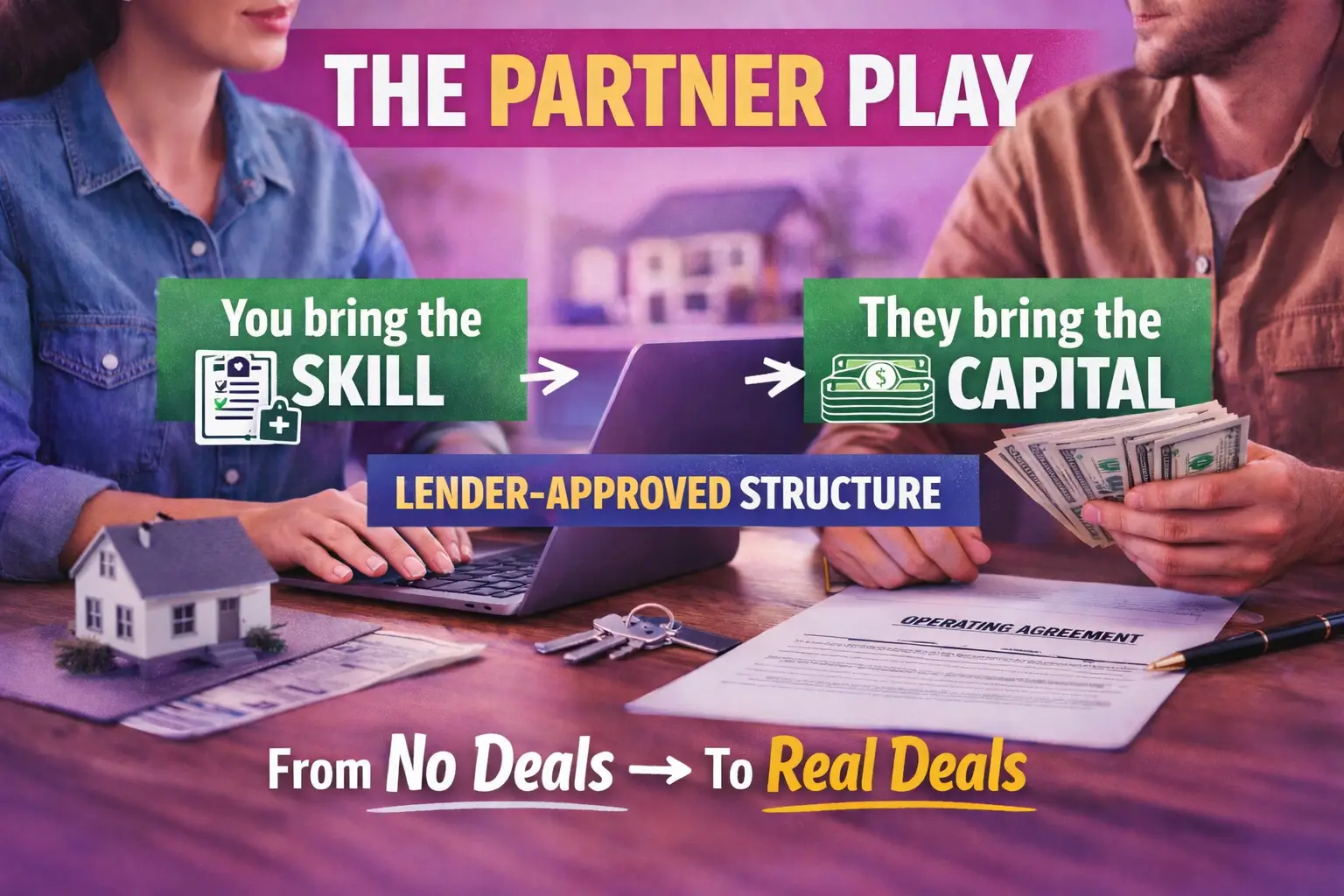
Pro Tip: The Cash Does Not Have to Be Yours
This is huge.
Your approval cash can come from:
- A partner
- A private money lender
- Seller credits/financing
As long as it’s documented, seasoned properly, and structured correctly, lenders are fine with it.
This is how investors scale while keeping their own liquidity high.
Costs to Remember That Are Separate
This breakdown does not include:
- Closing costs
- Utilities
- Insurance
- Agent commissions (if applicable)
- Extra holding costs
- Unexpected rehab overruns
Always keep a buffer.
Why I Recommend the Comfortable Range
| Cash Available | Max Purchase Price | Comfortable Target Range |
| $30,000 | $129,000 | $110k to $120k |
| $50,000 | $230,000 | $200k to $215k |
| $70,000 | $332,000 | $290k to $315k |
| $90,000 | $434,000 | $380k to $410k |
| $110,000 | $535,000 | $470k to $510k |
Yes, you can technically push to the max purchase price.
But experienced investors usually don’t.
Staying in the comfortable range means:
Less stress during underwriting
Faster approvals
Better leverage in negotiations
Room for surprises
Stronger lender relationships
Liquidity is power.
Smart investors protect it.
Use This Simple Calculator for Your Own Deal
Cash needed ≈ 15% of purchase price + 10% of rehab + 6 months of interest(your loan term)
If you want help running this on a real deal, that’s exactly what I do with investors every day. Contact me today or schedule a quick call.
Final Thought
Hard money isn’t expensive when you use it correctly.
It’s a tool to help you control more property, stay liquid, and grow faster.
The investors who scale are not the ones with the most cash.
They’re the ones who use leverage the smartest.
About the Author
Dahae Yi is a private money lender and real estate funding educator specializing in fix and flip and BRRRR financing. She teaches investors how to structure lender ready deals and offers flexible, relationship based funding terms that improve as the partnership grows. Her content focuses on helping investors fund their first one to five properties with clarity, confidence, and speed.
Follow Dahae Yi on Instagram @dahaeyi.lender — Hard Money & DSCR Lending Tips





Leave a Reply