
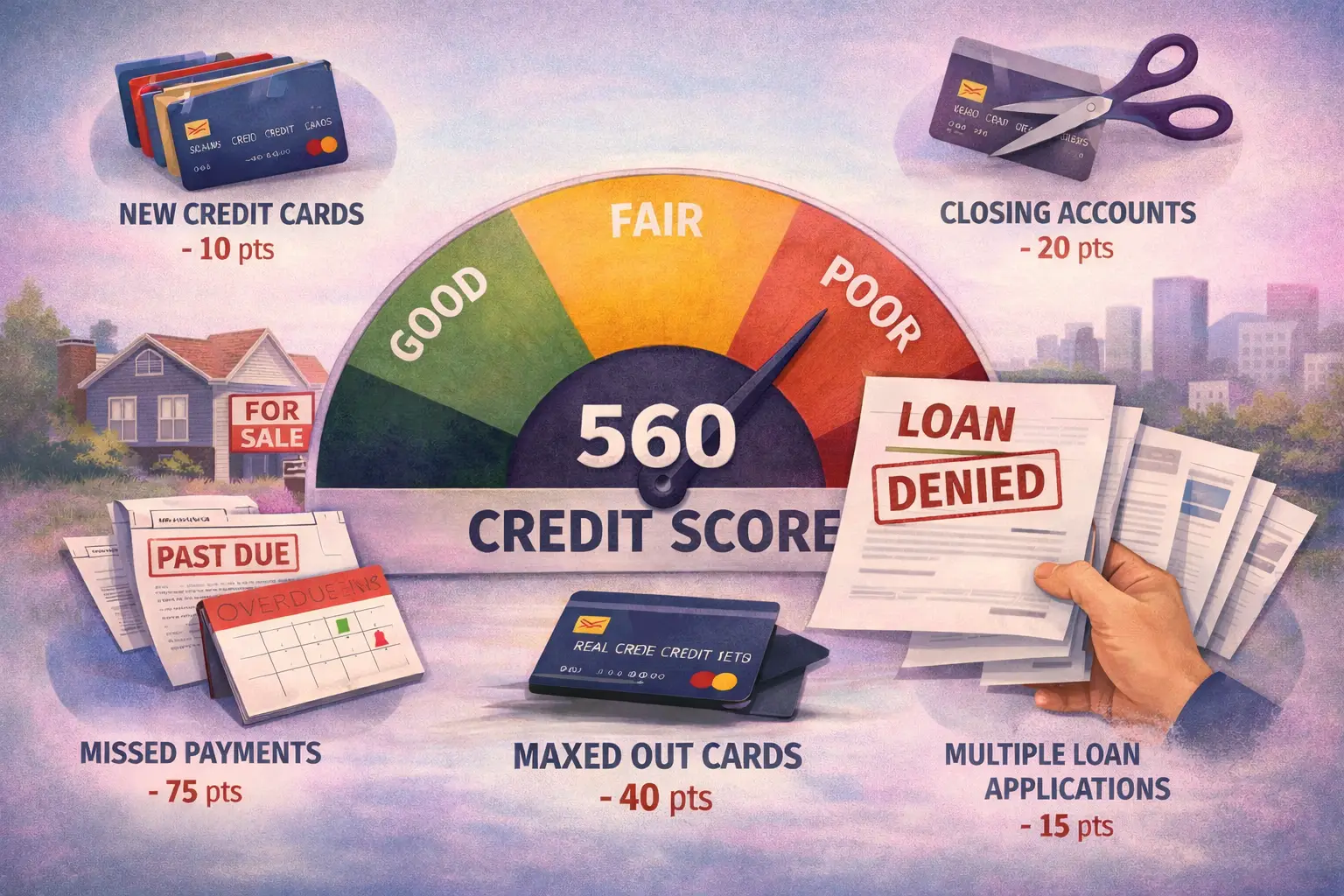
Opening new credit cards, closing old accounts, missing payments, maxing out cards, and applying for multiple loans at once will all lower your credit score before you apply for funding. Each of these actions signals risk to lenders and can cost you thousands in higher interest rates or even disqualify you from getting approved.
Actions That Drop Your Credit Score Before Loan Applications
| Action | Impact on Score | Why Lenders Care |
|---|---|---|
| Opening new credit cards | 5-10 points per inquiry | Signals you need more credit |
| Closing old accounts | 10-30 points | Reduces credit history length |
| Missing one payment | 50-100+ points | Shows unreliability |
| Maxing out cards | 20-50 points | High utilization looks desperate |
| Multiple loan applications | 5-10 points each | Appears you’re shopping desperately |
How to Protect Your Credit Score Before Applying for Funding
Step 1: Stop All New Credit Applications
Do not open any new credit cards, auto loans, or personal loans in the months before you apply for real estate funding. Every new application creates a hard inquiry that drops your score.
Step 2: Pay Everything Early
Set up automatic payments for at least the minimum on every account. Even one missed payment by a single day can drop your score significantly and stay on your report for several years.
Step 3: Keep Balances Under 30%
If you have a credit card with a ten thousand dollar limit, keep your balance below three thousand dollars. Lenders calculate your credit utilization ratio, and anything above 30% starts hurting your score.
Step 4: Leave Old Accounts Open
Even if you never use an old credit card, keep it open. Closing accounts reduces your available credit and shortens your credit history, both of which lower your score.
Step 5: Avoid Multiple Applications
When you need funding, pick a couple of options and apply within 30-60 days. This wouldn’t count as separate hard inquiries as long as the credit was pulled within that time period.
Deep Dive: Why These Actions Hurt Your Score
New Credit Cards Lower Your Score
When you apply for a new credit card, the issuer pulls your credit. This creates a hard inquiry. One inquiry might only drop your score 5 points, but if you open three cards in two months, that is 15 points gone. More importantly, new accounts lower the average age of your credit history. Lenders see a short credit history as riskier.
Closing Old Accounts Removes Good History
Your oldest credit card is often your most valuable one, even if you never use it. That account proves you have managed credit responsibly for years. When you close it, you lose that history. You also reduce your total available credit, which increases your utilization ratio even if you do not change your spending.
Missing Payments Is the Biggest Killer
Payment history makes up 35% of your FICO score. It is the single most important factor. Missing one payment can drop your score 50 to 100 points depending on your starting score and credit profile. Even worse, late payments stay on your report for several years.
Maxing Out Cards Signals Desperation
Credit utilization is the second biggest factor in your score at 30%. If you max out a card, lenders assume you are struggling financially or living beyond your means. Even if you pay it off every month, high balances at statement close hurt your score.
Multiple Applications Look Like You Are Scrambling
When lenders see five hard inquiries in one month, they wonder why you need so much credit so fast. Are you losing income? Do you have an emergency? Even if your reason is legitimate, multiple applications make you look risky.
Common Mistakes and How to Avoid Them
Mistake 1: Applying for Store Credit Cards for Discounts
You see a 20% off coupon if you open a store card, so you apply. That 20% discount might cost you thousands in higher interest rates on your real estate loan. Avoid all new credit applications when you know you will need funding soon.
Mistake 2: Paying Off and Closing Cards to Simplify
You pay off an old card and close it to reduce clutter. This drops your score by reducing available credit and shortening your history. Keep old cards open even if you never use them.
Mistake 3: Letting One Bill Slip Through
You think one missed payment will not matter. It does. Set up automatic payments for everything, even small bills. One late utility payment can cost you a better interest rate.
Mistake 4: Using Cards Right Before Applying
You put rehab materials on a credit card and plan to pay it off after closing. But your lender pulls your credit before closing and sees high balances. Your score drops and your rate goes up. Keep balances low during the entire funding process.
Mistake 5: Shopping Multiple Lenders Over Months
You apply with one lender in January, another in March, and another in May. Each creates a separate hard inquiry. If you need to shop multiple lenders, do it within a 30-60 day window so it counts as one inquiry.
Lender-Ready Credit Checklist
Before you apply for funding on your next flip or rental, make sure you can check these boxes:
- No new credit applications in the past 3 to 6 months
- All payments made on time for at least 12 months
- Credit card balances under 30% of limits
- No closed accounts in the past 6 months
- No collections or charge-offs
- Credit report reviewed for errors
- All old accounts left open even if unused
- Automatic payments set up for all bills
- Emergency fund in place so you do not need to max cards
- Clean explanation ready for any credit issues
If you cannot check all these boxes, work on fixing the gaps before you apply for funding. The better your credit looks, the better your terms will be.
FAQ: Credit Score and Real Estate Funding
How long before applying for a loan should I stop opening new credit? Wait at least 3 to 6 months after any new credit application before applying for real estate funding. New accounts can temporarily lower your score and make lenders nervous about your financial stability.
Will checking my own credit hurt my score? No. When you check your own credit, it counts as a soft inquiry and does not affect your score. Only hard inquiries from lenders when you apply for credit will impact your score.
Can I shop multiple mortgage lenders without hurting my credit? Yes, but do it within a 30-60 day window. Credit scoring models treat multiple mortgage inquiries within 30-60 days as a single inquiry. This lets you compare rates without damaging your score.
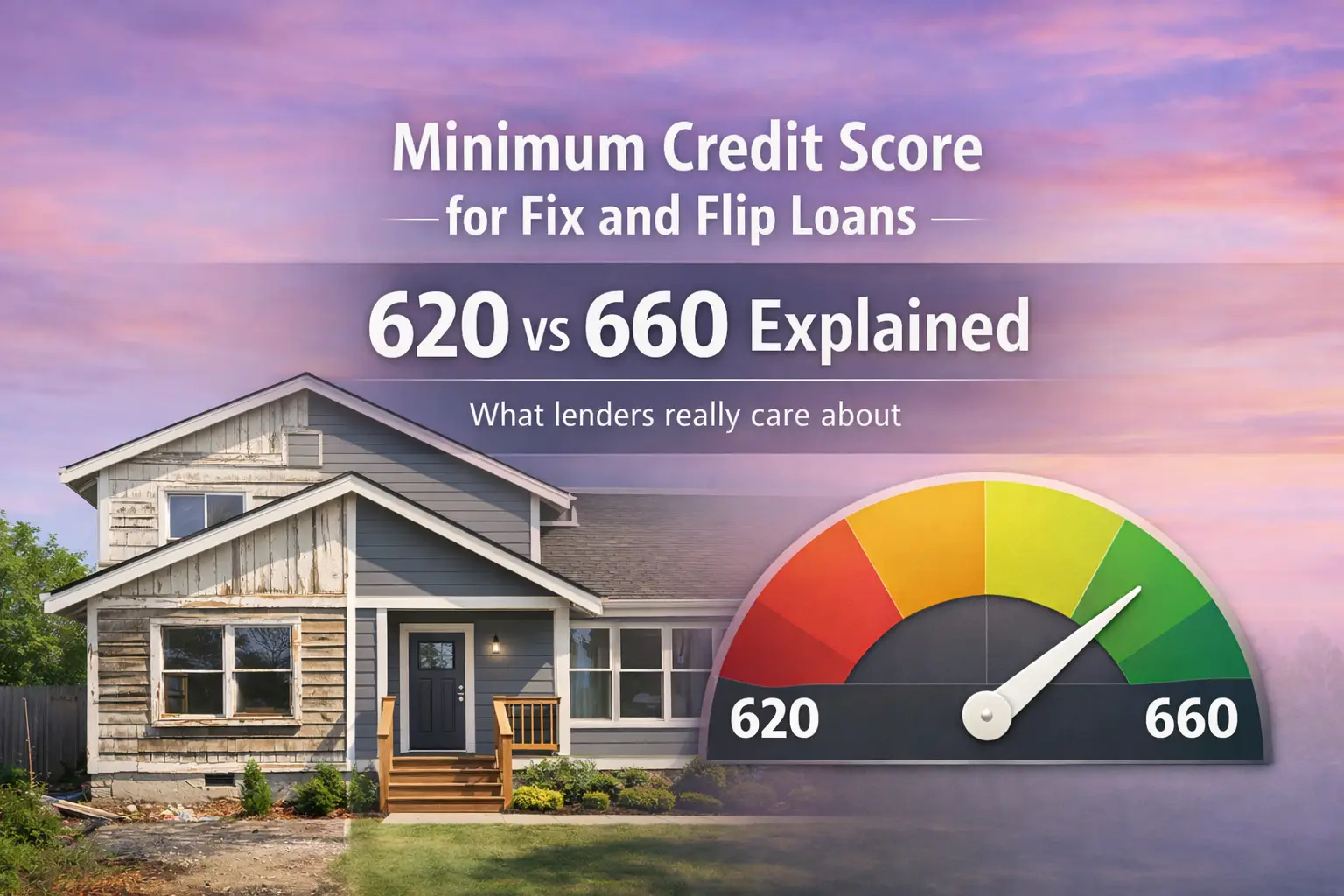
What is the minimum credit score for private money lending? Most hard money lenders want to see at least 660 for fix and flip loans. Some will go lower if the deal is strong and you have experience, but expect higher rates and lower loan-to-value. Most DSCR lenders want to see at least 680.
How much does one missed payment hurt my score? One missed payment can drop your score 50 to 100 points depending on your current score and credit profile. The higher your score, the bigger the drop. A missed payment stays on your report for several years.
Should I pay off all my credit cards before applying? You do not need to pay them to zero, but keep balances under 30% of your limits. Paying down to 10% or less is even better. Just avoid closing the cards after you pay them off.
Does paying rent or utilities build credit? Most rent and utility payments do not report to credit bureaus unless you use a service that reports them or unless you miss payments and they go to collections. Credit cards and loans are the main ways to build credit.
Can I improve my score quickly before applying for a loan? You can make fast improvements by paying down credit card balances and correcting errors on your credit report. These changes can show up within 30 to 60 days. But building strong credit takes time.
Will closing on a flip loan hurt my credit for my next deal? Taking out a loan will add a hard inquiry and a new account, which might temporarily lower your score by a few points. But if you make payments on time, your score will recover and even improve over time. Some lenders offer soft inquiry as well if you’re concerned about your credit impact.
What if I need a new car loan while I am flipping houses? Wait until after your flip loan closes if possible. If you must get a car loan, do it well before you apply for flip funding or wait until after your flip closes. Mixing different types of credit applications during the funding process creates complications.
Glossary of Credit Terms
Hard Inquiry: A credit check that happens when you apply for credit. Hard inquiries lower your score temporarily and stay on your report for 2 years.
Soft Inquiry: A credit check that does not affect your score, such as when you check your own credit or when companies send pre-approval offers.
Credit Utilization Ratio: The percentage of your available credit that you are using. Calculated by dividing your total balances by your total credit limits.
FICO Score: The most common credit scoring model used by lenders. FICO scores range from 300 to 850.
Payment History: A record of whether you pay your bills on time. This makes up 35% of your FICO score.
Credit Mix: The variety of credit accounts you have, such as credit cards, auto loans, and mortgages. This makes up 10% of your score.
Average Age of Accounts: How long your credit accounts have been open on average. Longer is better.
Collections: Unpaid debts that have been sent to a collection agency. Collections severely damage your credit score.
Charge-Off: A debt that the creditor has given up on collecting and written off as a loss. Charge-offs stay on your report for 7 years and significantly hurt your score.
Tradeline: Any credit account that appears on your credit report.
You cannot control interest rates. But you can control your credit score, which gets you a better rate.
Opening new cards, closing old accounts, missing payments, maxing out balances, and applying for multiple loans right before you need funding will cost you money. Each action tells lenders you are risky or desperate.
Do the opposite. Pay early. Keep balances low. Leave old accounts open. And do not touch your credit in the months before you apply.
Your interest rate on your next fix and flip or rental property depends on what you do today.
If you are actively working on a flip or BRRRR deal and want a lender who understands structure, grab a time on my calendar and let’s walk through it.
About the Author
Dahae Yi is a commercial loan officer and real estate funding educator specializing in fix and flip and BRRRR financing. She teaches investors how to structure lender-ready deals and offers flexible, relationship-based funding terms that improve as the partnership grows. Her content is designed to help investors scale faster, avoid common funding mistakes, and secure private capital with confidence.
Follow her on Instagram: https://www.instagram.com/dahaeyi.lender







Leave a Reply