

What if I Told You There’s Money Sitting in Your Walls Right Now?
You’ve been paying your mortgage for years. Every month, a chunk of your payment goes toward actually owning more of your house. That’s called equity. And here’s the thing most people don’t realize: that equity is real money you can actually use.
While you’re scrolling Zillow thinking “I wish I had enough for a down payment,” investors are pulling equity out of their homes and buying rental properties. They’re not richer than you. They just know about a tool called a HELOC.
Let me break this down in the simplest way possible.
What Exactly is a HELOC?
HELOC stands for Home Equity Line of Credit. Think of it like a credit card, but instead of some random credit limit, your limit is based on how much of your house you actually own.
Here’s How It Works:
Let’s say your house is worth $400,000 and you owe $250,000 on your mortgage. That means you have $150,000 in equity. A HELOC lets you borrow against that equity usually up to 80-85% of the property’s appraised value.
Simple math:
- Home value: $400,000
- What you owe: $250,000
- Your equity: $150,000
- What you can typically access: $400,000 x 85% – $250,000 = $90,000
That’s your hidden down payment.
Why Investors Love Using HELOCs for Real Estate
It’s Fast Money When You Need It
Real estate moves quickly. When a good deal pops up, you don’t have time to sell stocks or wait for your savings account to grow. A HELOC gives you instant access to capital.
You Only Pay Interest on What You Use
Unlike a regular loan where you get all the money at once and start paying interest immediately, a HELOC is different. You only pay interest on the amount you actually pull out.
Example:
- You have a $100,000 HELOC available
- You only use $50,000 for a down payment
- You only pay interest on that $50,000
Your Money Works Twice
This is where it gets smart. Your equity was just sitting there doing nothing. Now it’s:
- Still in your primary home (you still own it)
- Working as a down payment on a rental property that generates income
You’re literally making your money work in two places at once.
Real Example: How This Actually Works in Practice
Let me show you exactly how someone uses this strategy:
| Step | What Happens | Numbers |
| 1. Check your equity | Your home is worth $350,000, you owe $200,000 | $150,000 equity |
| 2. Get a HELOC | Bank approves up to 80% of property value ($280,000 total debt allowed) | $80,000 HELOC available |
| 3. Find a rental property | You find a $200,000 duplex | Needs $40,000 down (20%) |
| 4. Use HELOC for down payment | Pull $40,000 from your HELOC | Deal is funded instantly |
| 5. Rental income covers costs | Tenants pay $2,400/month rent | Covers mortgage + HELOC payment |
Now you own two properties instead of one. And the rental income is paying back the HELOC while building equity in the second property.
The Biggest Mistakes People Make (And How to Avoid Them)
Mistake #1: Waiting Until You “Save Enough”
While you’re saving $500 a month, property prices are going up $1,000 a month. You’re actually losing ground.
Better approach: Use your equity now while rates and prices work in your favor.
Mistake #2: Being Scared of Debt
Not all debt is bad. There’s a huge difference between credit card debt for clothes and a HELOC used to buy an income-producing asset.
Key difference:
- Bad debt: Takes money OUT of your pocket each month
- Good debt: Puts money INTO your pocket each month
Mistake #3: Not Doing the Math
You need to make sure the rental income covers:
- The rental property mortgage
- The HELOC payment
- Property expenses
- Still leaves you with cash flow
Mistake #4: Using HELOC for Everything
This is for investments, not vacations. Don’t pull equity to buy a boat. Use it to buy assets that pay you back.
Who Should Consider This Strategy?
✅ This is Great For You If:
- You own a primary or a rental property with enough equity
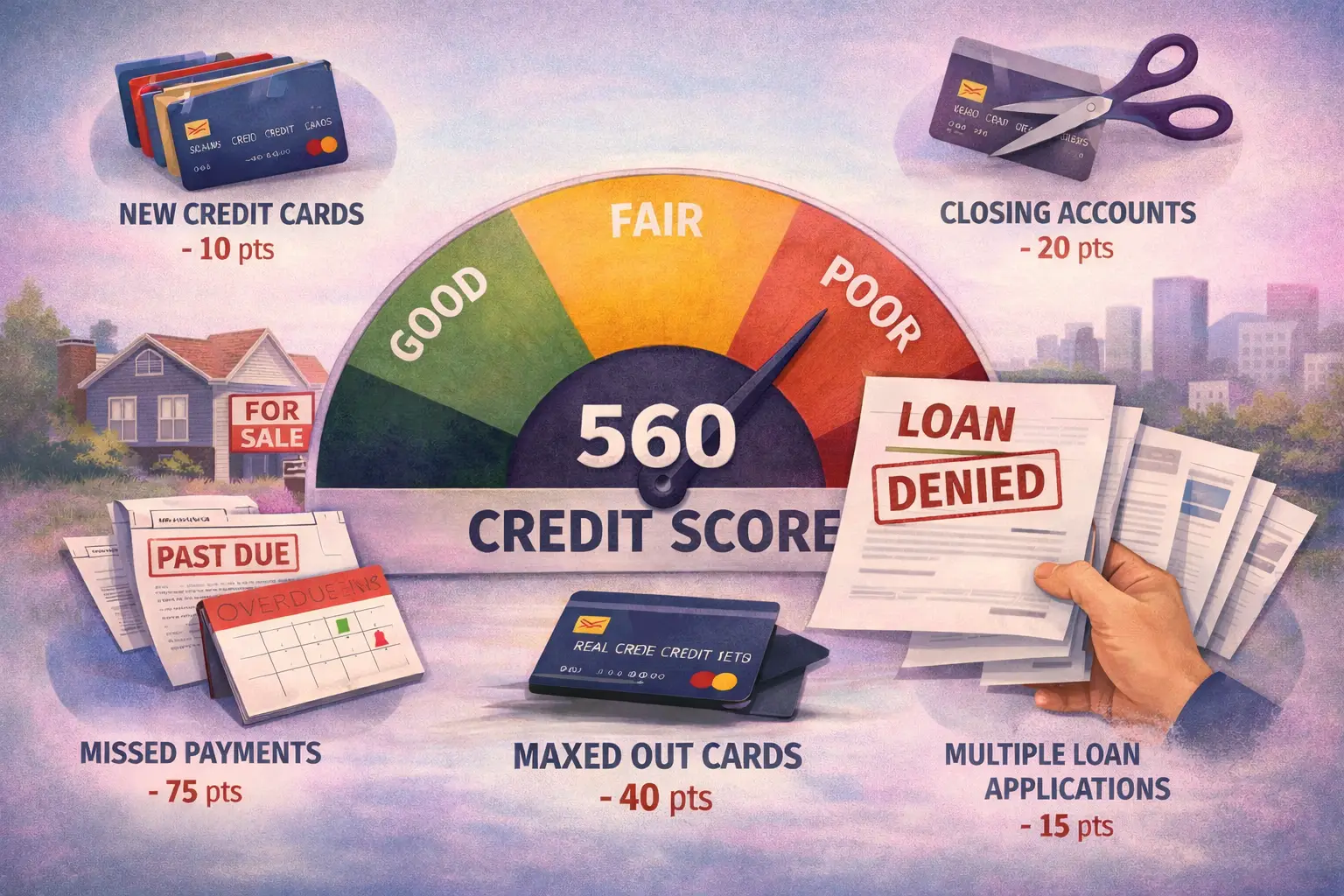
- Your credit score is 680 or higher
- You understand rental property basics
- You’re ready to be a landlord (or hire property management)
❌ Hold Off If:
- You’re already stretched thin financially
- You just bought your house (not enough equity yet)
- You’re planning to sell your primary home soon
- You have high-interest debt you should pay off first
- You’ve never owned a rental and haven’t done research
How to Get Started (Step-by-Step)
Step 1: Find Out How Much Equity You Have
Call your mortgage lender or check Zillow for your home’s current value. Subtract what you owe from what it’s worth.
Step 2: Shop Around for HELOC Rates
Don’t just go with your current bank. Check at least 3-5 lenders:
- Local banks
- Credit unions
- Online lenders
What to compare:
- Interest rate
- Fees (application, annual, closing costs)
- Draw period (how long you can pull money out)
- Repayment terms
Step 3: Get Pre-Approved
- Proof of income (pay stubs, tax returns) or No proof of income for using equity from an investment property
- Credit check
- Home appraisal
- Current mortgage statement
Step 4: Learn Your Market
Before you pull any money, know where you’re buying:
- What do rentals go for?
- What’s the vacancy rate?
- Are property values stable or growing?
- What are property taxes and insurance?
Step 5: Run Your Numbers on Every Deal
Never skip this. For every property you consider:
Calculate:
- Total monthly costs (mortgage, HELOC payment, insurance, taxes, maintenance, vacancy)
- Expected monthly rent
- Your actual cash flow
If it’s negative or breaks even, keep looking depending on your goals.
Common Questions People Ask
“Won’t I Be in Tons of Debt?”
You’re exchanging one form of equity for another. Yes, you’ll owe more on your primary home temporarily. But you’ll own a second property that’s paying you rent and building equity.
“What if the Rental Doesn’t Work Out?”
That’s why you run the numbers conservatively. Factor in vacancy. Budget for repairs. Don’t buy a property that barely works on paper.
“Can I Lose My Primary Home or Rental Property?”
A HELOC is secured by your home or your rental property, so yes, if you completely stopped paying, the bank could foreclose. That’s why you only do this if you have stable income and the rental numbers work even in worst-case scenarios.
“What About Interest Rates?”
The national average HELOC interest rate is 8.22% as of Jan 7, 2025, according to Bankrate’s latest survey of the nation’s largest home equity lenders.
Why Most People Never Do This (And Why You Should)
Here’s the truth: most people will read this, think “that’s interesting,” and do absolutely nothing.
They’ll keep waiting. Keep saving. Keep watching property prices go up. Keep seeing investors buy the deals they wanted.
Not because they can’t do it. Because they won’t.
The difference between people who build rental portfolios and people who talk about building rental portfolios? Action.
You don’t need to be some genius investor. You don’t need a finance degree. You just need to:
- Check your equity
- Get a HELOC
- Find a deal that works
- Pull the trigger
Your Next Steps
Here’s what to do in the next 48 hours:
Today:
- Find out your home’s current value (Zillow, Redfin, or ask a realtor)
- Calculate your equity
- Check your credit score (Credit Karma is free)
Tomorrow:
- Call 2-3 banks about HELOC rates
- Join a local real estate investor Facebook group
- Start looking at rental listings in your area
This Week:
- Get pre-approved for a HELOC
- Talk to investors who’ve done this
- Run numbers on 3-5 potential rental properties
The money is sitting in your walls right now. The only question is whether you’re going to use it or let it collect dust for another five years.
Bottom Line
Your home equity isn’t a museum piece. It’s a tool. Investors know this. They’re using HELOCs to buy rental properties while everyone else is “waiting for the right time.”
Good deals don’t wait. The market doesn’t wait. And if you keep waiting, you’ll look back in five years wondering why you didn’t start today.
You have the down payment. It’s been there the whole time. Now you know how to use it.
What’s your next move?
Disclaimer: This article is for educational purposes. Always consult with a financial advisor, CPA, and real estate attorney before making investment decisions. Every market is different, and what works in one area might not work in yours. Do your homework.
Follow Dahae Yi on Instagram @dahaeyi.lender — Hard Money & DSCR Lending Tips
Dahae Yi is a commercial mortgage lender and real estate funding educator specializing in fix and flip and rental financing, helping investors structure lender-ready deals, avoid funding mistakes, and scale their portfolios.








Leave a Reply