
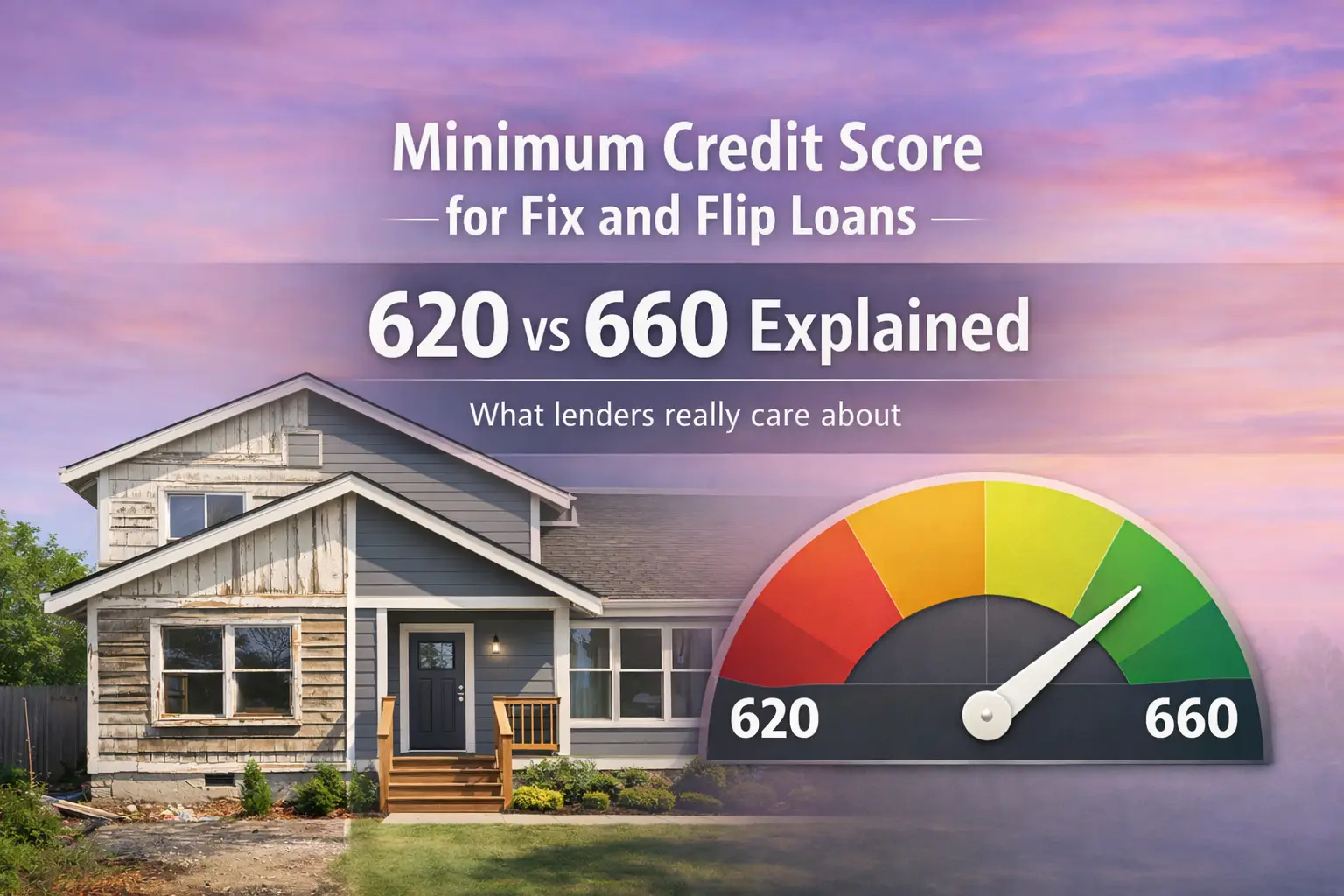
Most lenders require a credit score of 660 or higher for fix and flip loans. However, if you have a 620 credit score or above, you can still qualify with the right lender. The key difference is that borrowers between 620 and 660 may face higher cash requirements at closing, which can add thousands of dollars to your upfront costs.
Credit Score Requirements for Fix and Flip Loans
| Credit Score Range | Qualification Status | Typical Cash to Close Impact |
| 660+ | Qualifies with most lenders | Standard requirements |
| 620-659 | Limited lender options | Additional cash required for higher down payment or interest rate |
How to Improve Your Credit Score Before Applying
Before you submit your loan application, take these steps to maximize your credit score and minimize your cash requirements.
Step 1: Pull Your Credit Report
Get a free copy from AnnualCreditReport.com and review it carefully for errors or inaccuracies.
Step 2: Identify Late Payments or Errors
Look for any late payments that happened by accident, such as missed due dates during travel, payment processing delays, or bills sent to old addresses.
Step 3: Dispute Inaccurate Items
File disputes directly with the three credit bureaus: Equifax, Experian, and TransUnion. Include documentation showing the payment was made or that the late payment was an error.
Step 4: Wait for Resolution
Most disputes are resolved within 30 to 45 days. If successful, your score could jump 15 to 30 points or more.
Step 5: Reapply with Your Improved Score
Once your score reaches 660 or higher, you will qualify for better loan terms and lower cash requirements at closing.
Understanding Fix and Flip Loan Terms
Fix and flip loans are short-term loans designed for real estate investors who buy properties, renovate them, and sell them for profit. Here is what you need to know.
Loan to Value (LTV)
LTV is the percentage of the property value that the lender will fund. Most fix and flip lenders offer up to 75% LTV based on the After Repair Value (ARV). Your credit score directly impacts which LTV percentage you receive.
After Repair Value (ARV)
ARV is what the property will be worth after you complete all renovations. Lenders use this number to determine how much they will lend you. If your ARV is $280,000 and the lender offers 75% LTV, they will lend up to $210,000 for purchase price plus rehab funding combined.
Cash to Close
This is the total amount of money you need to bring to closing. It includes your down payment, closing costs, and any gap between the purchase price plus rehab costs and the loan amount.
Interest Rates
Fix and flip loans typically have interest rates between 8% and 12%. Borrowers with credit scores above 680 usually get rates on the lower end of this range.
Loan Term
Most fix and flip loans have 6 to 12 month terms. Some lenders offer extensions if you need more time to complete the project and sell the property.
Common Credit Score Mistakes That Cost You Thousands
Many investors unknowingly hurt their credit scores right before applying for funding. Avoid these mistakes.
Mistake 1: Ignoring Accidental Late Payments
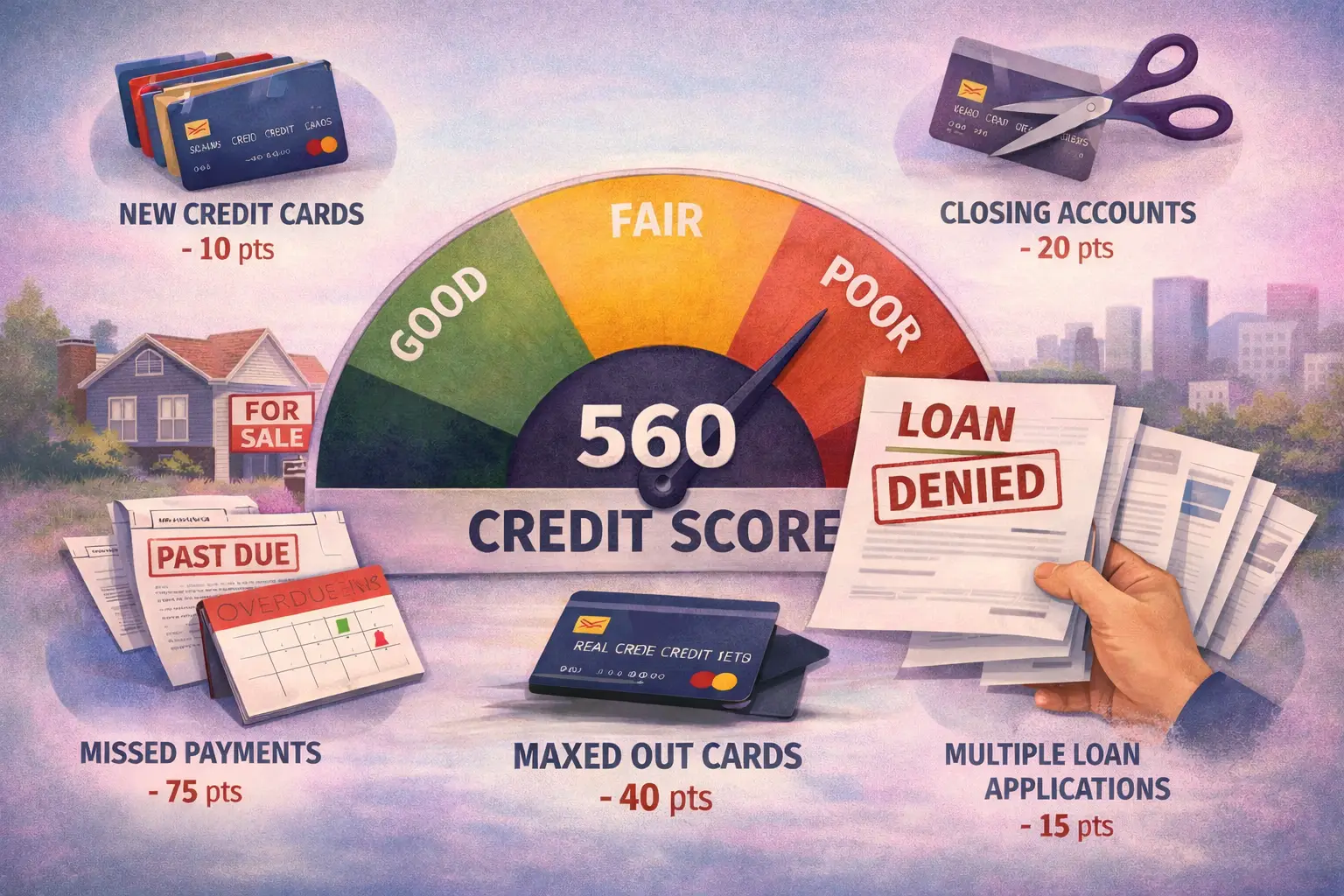
One late payment can drop your score by 15 to 30 points+. If it was accidental, you can dispute it and potentially remove it from your report.
Mistake 2: Not Checking Credit Until Application Time
Check your credit at least 60 days before you plan to apply for funding. This gives you time to fix any issues you discover.
Mistake 3: Assuming You Need Perfect Credit
You do not need a 750 credit score to get approved. A 660 score is often enough, and even 620 can work with the right lender.
Mistake 4: Spacing out your applications
Apply for multiple loans at once within 30-60 days. Within this time period multiple hard inquiries only impact your credit score once or work with a broker who can shop your deal to multiple lenders at once.
Mistake 5: Maxing Out Credit Cards
Your credit utilization ratio matters. Keep your balances below 30% of your available credit, even if you pay them off each month.
Mistake 6: Closing Old Credit Accounts
Older accounts help your credit history length. Keep them open even if you rarely use them.
Lender-Ready Fix and Flip Loan Package
When you apply for funding, lenders want to see that you have done your homework. Here is what you should prepare.
Property Information:
- Property Address
- Purchase Price
- Rehab Cost
- Special Rehab Scope (expanding sqft/changing unit count/repairing fire damage/conversion of basement, attic, porch/deck/attached garage)
- ARV
- Target Closing Date
- Exit strategy
- Backup plan if property does not sell quickly
Financial Analysis:
- Estimated credit score
- Cash Reserve
- Source of Down Payment (borrower cash/gap loan/other)
Your Background:
- Credit score documentation
- Proof of funds for down payment
- Previous real estate experience (if any)
- Bank statements showing reserves
- Flips Completed in the Last 36 Months (HUD)
The more organized your package, the faster you will get approved and the better your terms will be.
Frequently Asked Questions
Can I get a fix and flip loan with a 600 credit score? Most traditional fix and flip lenders require at least 620. Below 620, your options become very limited. Focus on credit repair first, then apply for funding. Or you can partner with someone with a higher credit score.
What if my late payment was not my fault? You can dispute late payments that were caused by billing errors, identity theft, or other issues beyond your control. Provide documentation to support your claim when you file the dispute.
How long does a credit dispute take? Credit bureaus have 30 to 45 days to investigate and respond to disputes. If they cannot verify the negative item, they must remove it from your report.
Will disputing a late payment always work? No, but it is worth trying if the late payment was accidental or incorrect. Many disputes are successful, especially when you provide supporting documentation.
How much does credit score affect my interest rate? A difference of 20 to 40 points in your credit score can change your interest rate by 0.5% to 1.5%. Over a 9-month loan on $200,000, that is $750 to $2,250 in extra interest. This depends on other factors so talk to your lender for accurate information.
What is the fastest way to raise my credit score? Pay down credit card balances below 30% utilization, dispute any errors on your report, and make all payments on time going forward.
Do I need to tell the lender about a disputed item? Be honest about your credit situation. If you are actively disputing an item, let the lender know. Many will wait for the dispute to resolve before making a final decision.
What happens if I apply at 645 and then improve to 665? You can reapply or ask the lender to reconsider your application with your updated score. Some lenders will adjust your terms if your score improves before closing.
Glossary of Key Terms
ARV (After Repair Value): The estimated value of a property after all planned renovations are complete.
Credit Score: A three-digit number that represents your creditworthiness based on your credit history.
LTV (Loan to Value): The ratio of the loan amount to the property value, expressed as a percentage.
Hard Inquiry: A credit check that occurs when you apply for credit and can temporarily lower your credit score.
Credit Utilization: The percentage of your available credit that you are currently using.
Fix and Flip Loan: A short-term loan designed for investors who buy, renovate, and resell properties quickly.
Private Money Lender: An individual or company that lends money for real estate investments, often with more flexible terms than banks.
Scope of Work: A detailed list of all renovations and repairs planned for a property.
Cash to Close: The total amount of money a borrower must bring to closing, including down payment and fees.
Credit Dispute: A formal challenge to incorrect or inaccurate information on your credit report.
Next Steps for Your Fix and Flip Funding
If you have a 620 credit score or higher and you are working on a fix and flip deal, you have options. Before you apply anywhere, take 15 minutes to check your credit report for errors. That one step could save you thousands of dollars at closing.
Remember: going from 645 to 660 is not just about qualifying. It is about keeping more of your money in your pocket so you can fund more deals and scale faster.
If you are under contract or actively making offers and you want to talk through your numbers with someone who understands structure and lending, I am happy to look at your deal. Book a time on my calendar and we can walk through it together.
About the Author
Dahae Yi is a commercial loan officer and real estate funding educator specializing in fix and flip and rental financing. She teaches investors how to structure lender-ready deals and offers flexible, relationship-based funding terms that improve as the partnership grows. Her content is designed to help investors scale faster, avoid common funding mistakes, and secure capital with confidence.Follow Dahae on Instagram: https://www.instagram.com/dahaeyi.lender





Leave a Reply