
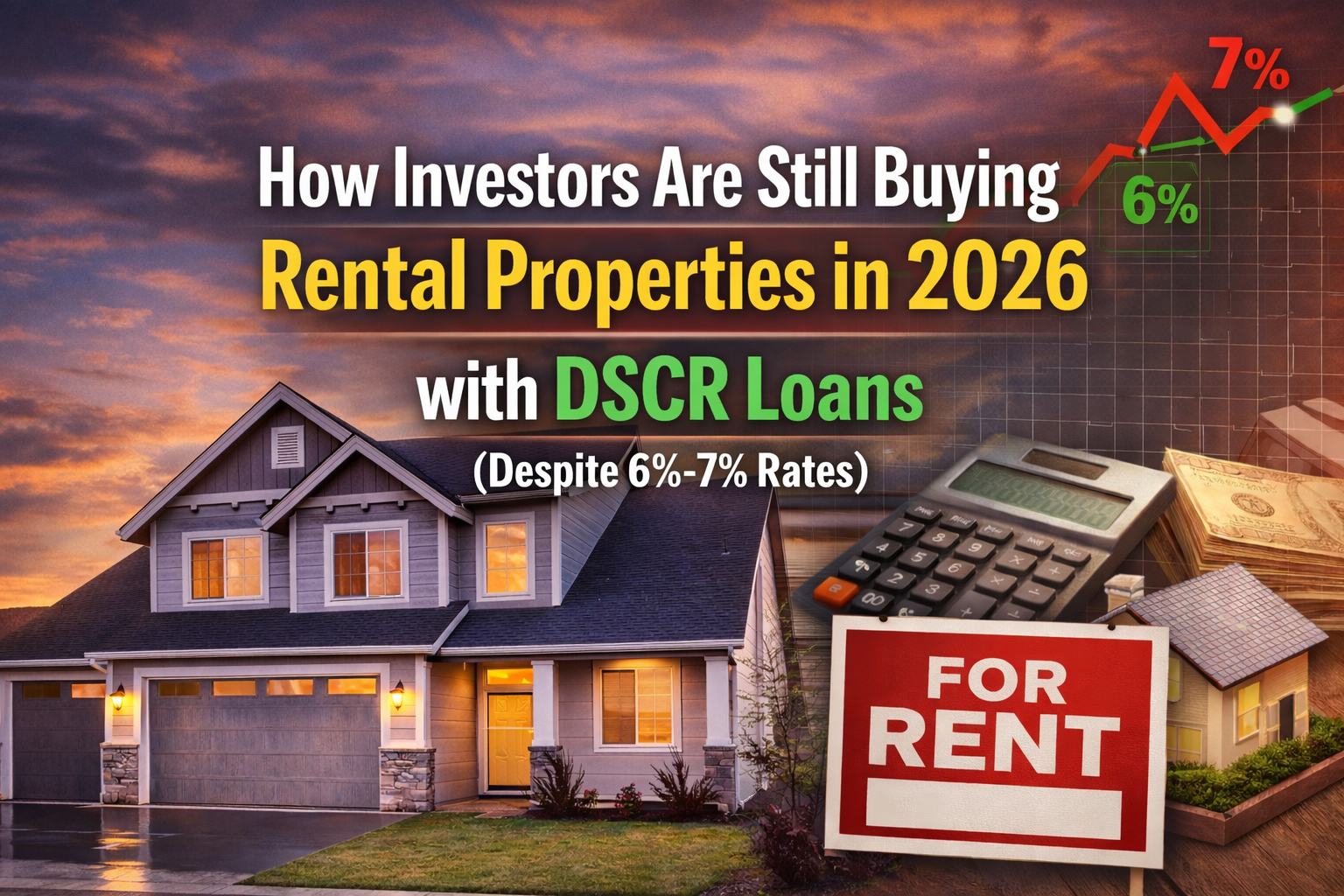
Short Answer
DSCR loans let investors buy rental properties in 2026 even with rates at 6 to 7 percent because they qualify based on the property’s rent income, not your personal W-2 income. While most buyers wait for rates to drop, smart investors are using DSCR loans to build their rental portfolio now when the competition is low. The loan cares only if the rent covers the mortgage payment.
DSCR Loan vs Traditional Loan: Key Differences
| Feature | DSCR Loan | Traditional Mortgage |
| Qualification | Property cash flow | Your W-2 income |
| Income Documentation | Rent roll or appraisal | Pay stubs, tax returns, W-2s |
| Ideal For | Investors with multiple rental properties | Primary home buyers or first rental |
| Typical Rate (2026) | 6.5% to 7.5% | 6% to 6.5% |
| Debt-to-Income Ratio | Not used | Must meet strict DTI limits |
| Processing Time | Around 30 days | 30 to 45 days |
| Min DSCR Ratio | Usually 1.0 or higher | N/A |
Step-by-Step: How to Buy a Rental Property with a DSCR Loan in 2026
Step 1: Find a Cash-Flowing Property
Look for properties where the monthly rent covers the mortgage payment, taxes, insurance, and ideally gives you a small cushion. Use the 1 percent rule as a starting point: if the home costs 200,000 dollars, target at least 2,000 dollars per month in rent.
Step 2: Calculate Your DSCR Ratio
The DSCR ratio is simple math:
DSCR = Monthly Rent ÷ Monthly Debt Payment
Example:
- Monthly rent: 2,400 dollars
- Mortgage payment (including taxes and insurance): 2,200 dollars
- DSCR = 2,400 ÷ 2,200 = 1.09
A DSCR of 1.0 or higher means the rent covers the payment. Most lenders want to see 1.0 to 1.25.
Step 3: Gather Your Documents
You need much less paperwork than a traditional loan:
- Purchase contract
- Rent estimate (based on rent comparables or lease agreement)
- Proof of down payment funds (bank statements, retirement account, stock, etc.)
- Property insurance quote
- Photo ID
No W-2s. No tax returns. No pay stubs.
Step 4: Submit to a DSCR Lender
Find a lender who specializes in DSCR loans and a specific rental strategy you have. Not all lenders offer them. Private/hard money lenders and portfolio lenders are your best bet. Traditional banks usually do not offer DSCR products.
Step 5: Close in About 30 Days
Because there is less income documentation, DSCR loans often close faster than traditional mortgages. You can be under contract and close within 30 days if everything is clean.
Real Example: How Jorge Used a DSCR Loan to Buy His Fifth Rental in 2025
Jorge already owned four rental properties. He had W-2 income, but like many investors, traditional lenders were limiting him because his existing mortgages were counted against his debt-to-income ratio.
Instead of waiting, Jorge used a DSCR loan that qualified based on the property’s cash flow, not his personal income.
Deep Dive: Understanding How DSCR Loans Work
What Does DSCR Stand For?
DSCR stands for Debt Service Coverage Ratio. It measures whether a property generates enough rent to cover its debt payments.
How Lenders Calculate DSCR
Lenders take the property’s monthly rent and divide it by the full monthly debt payment. The debt payment includes:
- Principal and interest
- Property taxes
- Insurance
- HOA fees (if applicable)
If the number is 1.0 or higher, the property covers its own costs. If the number is below 1.0, the property does not generate enough rent to cover the payment, and most lenders will not approve the loan.
Example.
Monthly rent: 1,950 dollars
Monthly mortgage payment (PITI): 1,480 dollars
The DSCR Calculation
DSCR = 1,950 ÷ 1,480 = 1.32
Why DSCR Loans Exist
DSCR loans exist because traditional mortgage rules do not work well for real estate investors. If you own multiple properties, your debt-to-income ratio looks terrible on paper even if every property cash flows. DSCR loans solve this problem by ignoring your personal income and focusing only on the property’s ability to pay for itself.
Typical DSCR Loan Terms in 2026
- Loan-to-value (LTV): 75 to 80 percent (you need 20 to 25 percent down)
- Interest rates: 6.5 to 7.5 percent
- Loan term: 30 years fixed or adjustable
- Prepayment penalty: 3 to 5 years or shorter if desired (ask your lender)
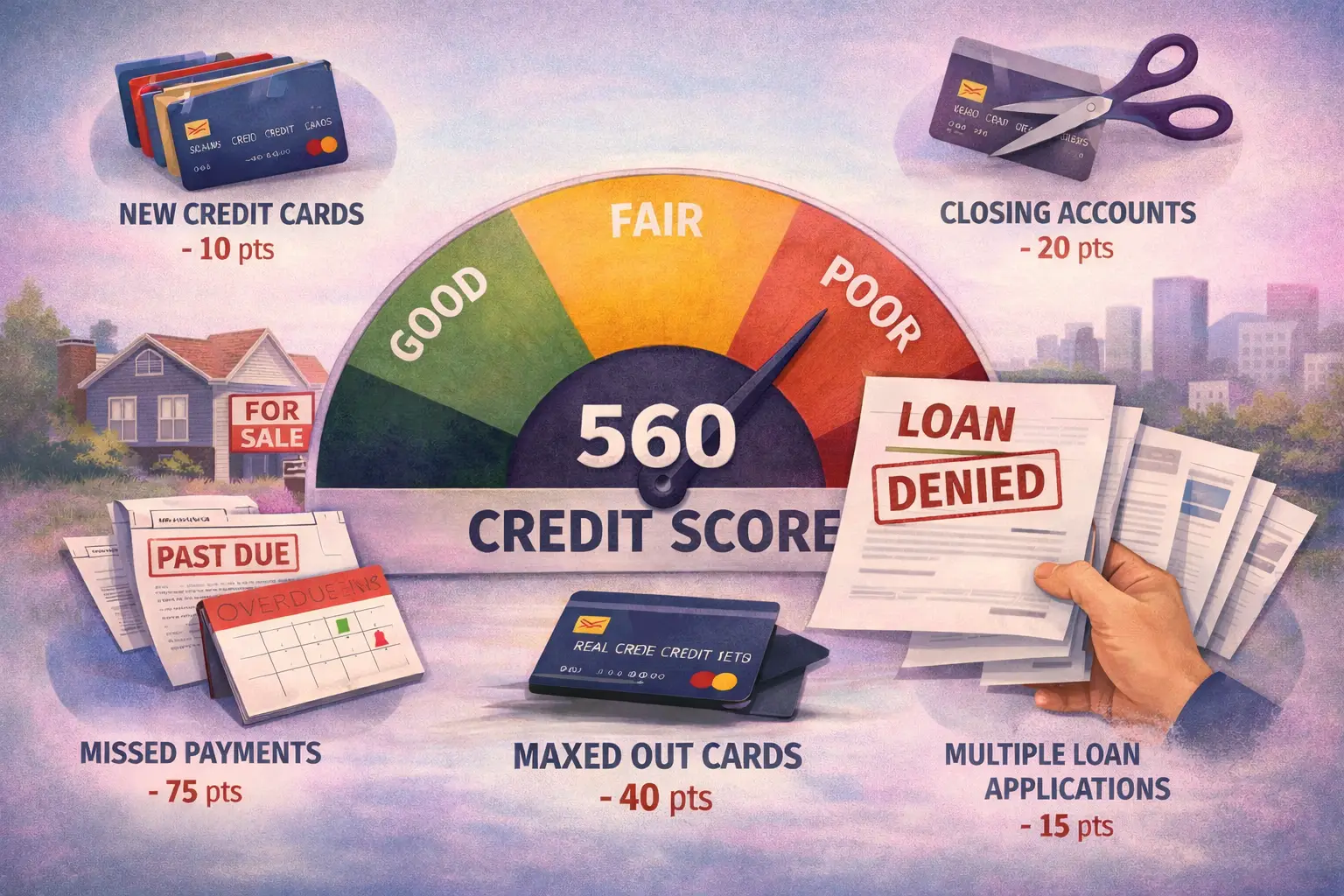
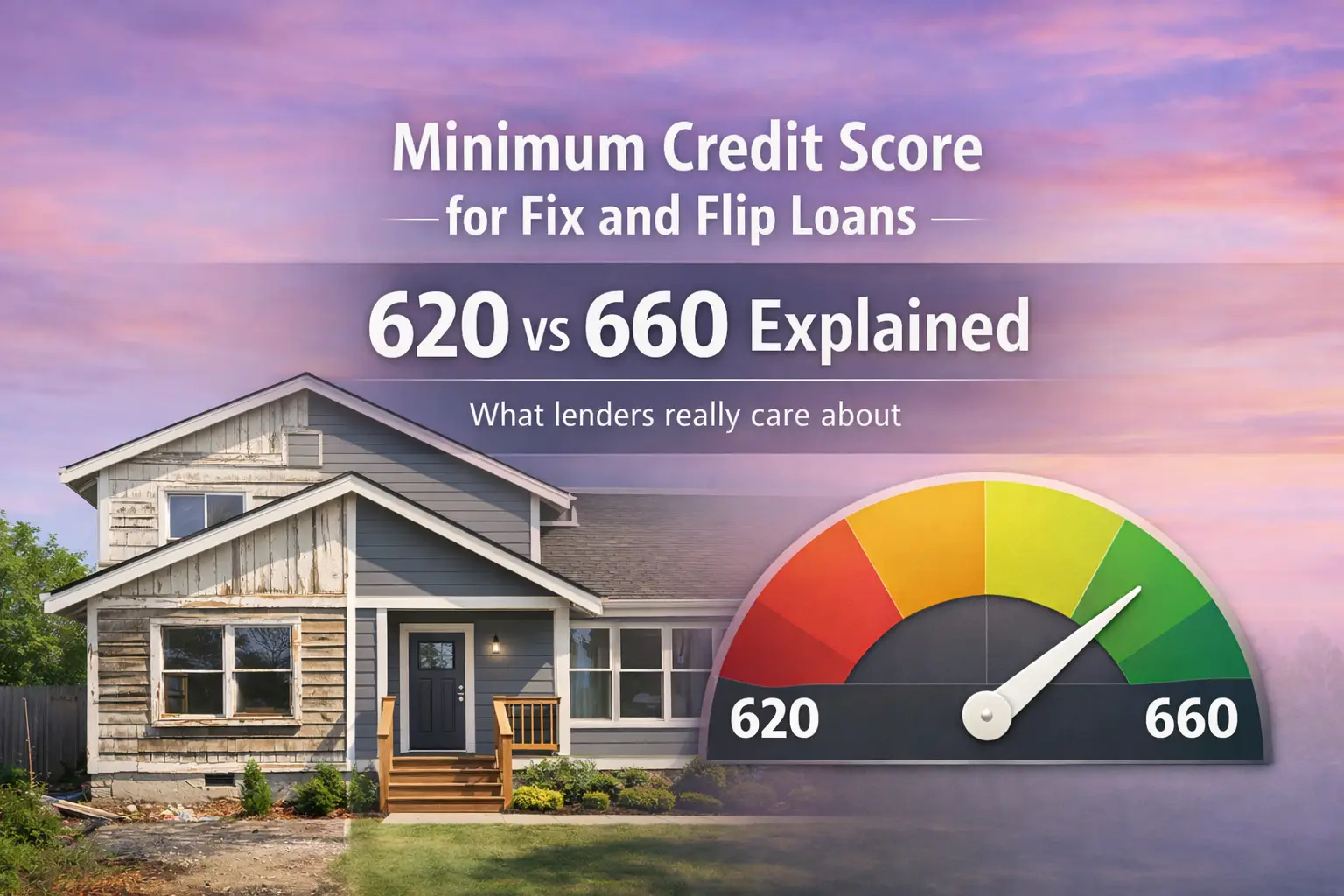
- Minimum credit score: 660 to 680
Who Should Use DSCR Loans
DSCR loans work best for:
- Investors who already own multiple properties
- Self-employed investors with complex tax returns
- W-2 earners whose debt-to-income ratio is maxed out
- Anyone who wants to scale their rental portfolio quickly
DSCR loans are not ideal for first-time buyers purchasing their primary home. Those buyers should use conventional or FHA loans.
Common Mistakes Investors Make with DSCR Loans (And How to Avoid Them)
Mistake 1: Overestimating the Rent
Some investors use optimistic rent numbers to make the DSCR ratio look good. The lender will order an appraisal that includes a rent schedule. If your projected rent is too high, the appraisal will come back lower, and your loan may not qualify.
How to Avoid It: Use conservative rent estimates. Look at actual comparable rentals in the area. Call a property manager and ask what they think the property will rent for. Build in a buffer.
Mistake 2: Forgetting About All the Costs
When calculating DSCR, you must include property taxes, insurance, and HOA fees. Some investors only look at the principal and interest payment and get surprised when the full PITI payment makes the DSCR too low.
How to Avoid It: Get a full breakdown of costs before making an offer. Ask the seller for tax bills. Get an insurance quote.
Mistake 3: Not Shopping Lenders
Not all DSCR lenders have the same terms. Some require 1.25 DSCR. Others accept 1.0. Some use higher income based on your rental strategy. Some move faster.
How to Avoid It: Talk to at least two or three DSCR lenders before choosing one. If you would rather save that time, work with a trusting broker who understands guidelines from several different lenders.
Mistake 4: Waiting for Rates to Drop
Many investors sit on the sidelines waiting for 5 percent rates. Meanwhile, good properties get bought by investors who understand that you can refinance later.
How to Avoid It: If the property cash flows at current rates, buy it. Lock in the property now. Refinance later if rates improve. Waiting costs you time and deals.
Mistake 5: Ignoring the Refinance Timeline
Some DSCR loans have prepayment penalties or require you to hold the loan for a certain period before refinancing.
How to Avoid It: Ask your lender about prepayment penalties and refinance rules before closing. If you plan to refinance when rates drop, make sure your loan allows it.
Borrower Checklist: How to Package Your DSCR Loan Request
Use this checklist to make your funding request clean and lender-ready.
Property Information:
- [ ] Full property address
- [ ] Purchase price
- [ ] Property type (single-family, duplex, condo, etc.)
- [ ] Current condition (move-in ready or needs work)
Rent Information:
- [ ] Estimated monthly rent (with comparable rentals as backup)
- [ ] Current lease (if property is already rented)
Financial Information:
- [ ] Source of funds
- [ ] Credit score (pull your own credit first so there are no surprises)
Insurance and Taxes:
- [ ] Homeowners insurance quote
- [ ] Annual property tax amount (from listing or tax records)
Additional Documents:
- [ ] Photo ID
- [ ] LLC documents (if buying under an LLC)
When you present your deal this way, lenders take you seriously. It shows you understand the business. Another good option is to just ask your lender what they need.
FAQ: DSCR Loans for Rental Properties in 2026
What credit score do I need for a DSCR loan?
Most DSCR lenders require a minimum credit score of 660 to 680.
Can I use a DSCR loan for a fix and flip property?
No. DSCR loans are for rental properties that generate monthly rent. If you are flipping a property and selling it in 6 months, you need a different loan type like private money or hard money.
Do I need to show tax returns for a DSCR loan?
No. DSCR loans do not require tax returns, W-2s, or pay stubs. The lender only cares about the property’s rent and the debt payment.
What if the property is vacant?
If the property is vacant, the lender will use an appraised rent value from the appraisal report. The appraiser looks at comparable rentals in the area to estimate what the property should rent for.
Can I buy a BRRRR property with a DSCR loan?
Yes. Many investors use DSCR loans for the refinance step in a BRRRR deal. After you buy, rehab, and rent the property, you can refinance into a DSCR loan to pull out your equity and move to the next deal.
Are DSCR loan rates higher than conventional rates?
Yes. DSCR loan rates are usually 0.5 to 1.0 percent higher than conventional mortgage rates because they carry more risk for the lender. In 2026, expect rates between 6.5 and 7.5 percent.
How much do I need for a down payment?
Most DSCR lenders require 20 to 25 percent down.
Can I use a DSCR loan for my first rental property?
Yes. DSCR loans work for first-time rental property buyers as long as the numbers make sense. You do not need to already own rentals to qualify.
What happens if my DSCR ratio is below 1.0?
If your DSCR is below 1.0, most lenders will not approve the loan because the rent does not cover the debt payment. Some lenders will work with you. You would need to increase the rent, put more money down to lower the payment, or find a different property.
Can I refinance a DSCR loan later when rates drop?
Yes. If rates drop in 2027 or 2028, you can refinance your DSCR loan into a lower rate. Just check with your lender about prepayment penalties before closing.
Glossary of Terms
DSCR (Debt Service Coverage Ratio): A ratio that measures whether a property’s rent income covers its debt payments. Calculated as monthly rent divided by monthly debt payment.
LTV (Loan-to-Value): The percentage of the property’s value that the lender will finance. An 80 percent LTV means you need a 20 percent down payment.
PITI: Principal, Interest, Taxes, and Insurance. The full monthly payment on a mortgage loan. If you have an HOA fee that is sometimes called PITIA and this is the total monthly payment if applicable.
Cash Flow: The money left over each month after all expenses are paid. Positive cash flow means the property makes money. Negative cash flow means you pay out of pocket each month.
Appraisal: A professional opinion of a property’s value. For DSCR loans, the appraisal often includes a rent schedule that estimates what the property should rent for.
Conventional Loan: A standard mortgage backed by Fannie Mae or Freddie Mac. These loans follow strict underwriting guidelines and usually require income documentation.
Prepayment Penalty: A fee charged by some lenders if you pay off or refinance your loan early.
Why Investors Are Not Waiting for 5 Percent Rates
In 2026, mortgage rates are holding steady between 6 and 6.5 percent. Redfin, Zillow, and Realtor all project rates will stay in this range for most of the year. Many buyers are waiting for rates to drop back to 5 percent before they buy their next rental property.
But here is the problem with waiting: you lose time.
Every month you wait is a month you are not building equity, not collecting rent, and not scaling your portfolio. Meanwhile, investors who understand DSCR loans are buying properties every week. They are not waiting for perfect rates. They are buying properties that cash flow at current rates, and they plan to refinance later if rates improve.
This strategy works because rental properties pay for themselves. If you buy a property with a DSCR of 1.1 or higher, the rent covers the mortgage. Even at 6.875 percent, the property pays its own bills. You are not funding the mortgage out of pocket.
And if rates drop to 5 percent in three years, you refinance and lower your payment. Now your cash flow improves even more. But you already own the property. You already locked in the deal. You already started building equity.
Investors who wait miss this window. They miss the opportunity to buy while other buyers are sitting on the sidelines. They miss the chance to refinance later and improve their position.
The 2026 strategy is simple: buy properties that cash flow now, lock in good deals while competition is lower, and refinance later if rates improve.
If You Want Help Structuring Your Next Deal
If you are actively working on a rental property purchase and want to see if it qualifies for DSCR financing, schedule a time on my calendar and we can walk through the numbers together. I help investors structure lender-ready deals that qualify the first time.
About the Author
Dahae Yi is a commercial mortgage lender and real estate funding educator specializing in fix & flip, rental, and BRRRR financing. She teaches investors how to structure lender-ready deals and offers flexible, relationship-based funding terms that improve as the partnership grows. Her content is designed to help investors scale faster, avoid common funding mistakes, and secure financing with confidence. Follow her on Instagram: https://www.instagram.com/dahaeyi.lender





Leave a Reply